 ANNUAL PROGRESS REPORT
2025-26
Building the Hindu
Civilisational Discourse
Annual Report • July 2025 - June 2026
Director’s Note
In the era of information explosion, content production risks getting trapped in a paradox of meaningless compulsion. The supply of content already outweighs demand by an extraordinary margin, and that imbalance is widening exponentially. At the same time, the algorithms that increasingly gatekeep what people watch are optimised not to raise awareness or deepen understanding, but to titillate, provoke and endlessly entertain. The attention economy is, in many ways, a time-sink that rewires the collective brain by waging a relentless war on attention spans. Its most visible manifestation is the rise of short-form video, now among the most consumed formats across demographics and platforms. The higher-order consequences are more serious. They range from declining mental well-being and compulsive consumption on the one hand to the trivialisation of political discourse on the other.
Any content that sincerely engages with the world and attempts to offer sense-making through nuance, complexity and respectful dialogue is therefore structurally disadvantaged. It does not hijack the viewer’s limbic system with the same cunning efficiency as outrage, spectacle or novelty. As a result, the very formats most suited to serious civilisational discourse are often the least favoured by the platforms through which such discourse must now travel. It is in this difficult environment that Upword Foundation has spent the past year rethinking how civilisational storytelling must be produced, packaged and distributed.
The first challenge has been speed. A historical or civilisational argument may concern processes unfolding over centuries, but the audience’s window of attention is often created by a news cycle that lasts only a few days. We have therefore worked to dramatically reduce the turnaround time of our animated videos so that they can participate in the immediate spike of public interest around an event while still offering something far more durable than commentary on the event itself. Our objective has been to use the velocity of the news cycle as an entry point into long-arc civilisational analysis: to move the viewer from “what happened?” to “what does this reveal about the deeper structures shaping our society, politics and history?”
The second challenge has been production capability. Over the past year, we have systematically integrated cutting-edge AI tools into an in-house workflow led by human researchers, writers, editors and visual artists. For us, AI is not a substitute for human judgement or creativity. It is an amplifier. Used intelligently, it allows small teams to attempt forms of visual storytelling that would previously have required much larger budgets, longer production schedules and specialised external vendors.
This integration has also changed the role of our creative team. Our visual artists are no longer merely executing predefined assets; they are increasingly becoming civilisational storytellers in their own right, capable of translating abstract historical and philosophical ideas into compelling visual narratives. Building this capability internally is central to future-proofing Upword’s production pipeline and to taking the quality, scale and ambition of our storytelling to the next level.
The third challenge has been meeting the audience where it is without surrendering to the logic of the medium. We cannot complain about shrinking attention spans while refusing to communicate in the formats that now command attention. Nor can a serious civilisational institution afford to become so high-brow that it loses contact with the very public discourse it hopes to influence.
Our expansion into Reels and Shorts has therefore been deliberate. Short-form content gives us a rapid-response capability to highlight emerging threats, distortions and challenges facing India while maintaining strong brand recall between major long-form releases. It allows us to intervene in live conversations, reach younger and more mobile-first audiences, and create multiple pathways into our deeper body of work. The launch of Upword Hindi follows the same logic: if civilisational discourse is to shape society at scale, it cannot remain confined to an English-speaking intellectual niche.
The larger lesson from the past year is that formats will continue to change, algorithms will continue to shift, and the competition for attention will only intensify. Upword cannot control that environment. What we can control is the clarity of our purpose and the sophistication of our response to it. Our task is not simply to produce more content. It is to use contemporary media intelligently enough that enduring ideas can survive inside an ecosystem designed for ephemera. That requires speed without superficiality, technological adoption without intellectual dilution, accessibility without populism, and reach without surrendering seriousness.
The work of the past year has been an attempt to build precisely that capability. The next phase is to deepen it.
Ashish Dhar
Metrics
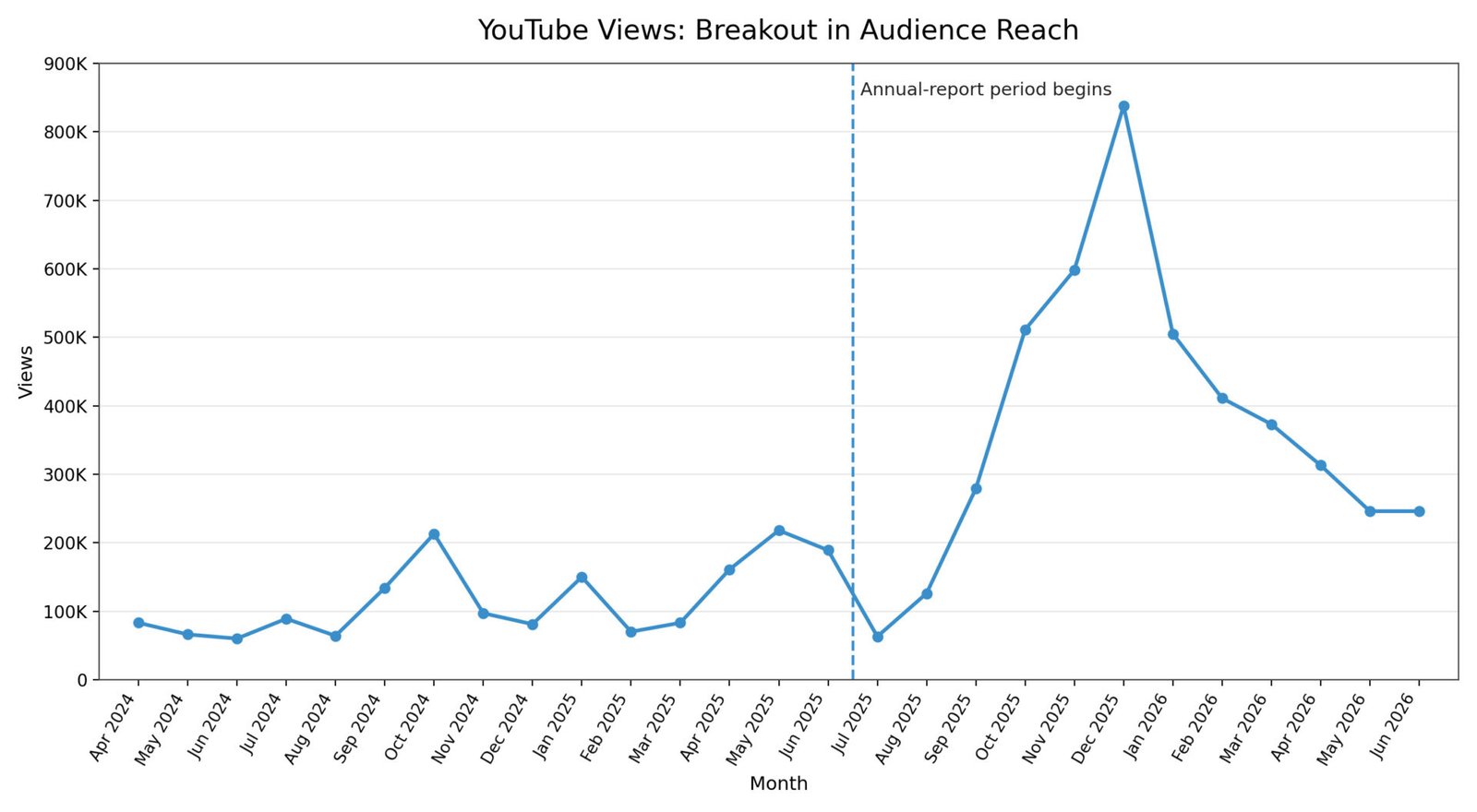
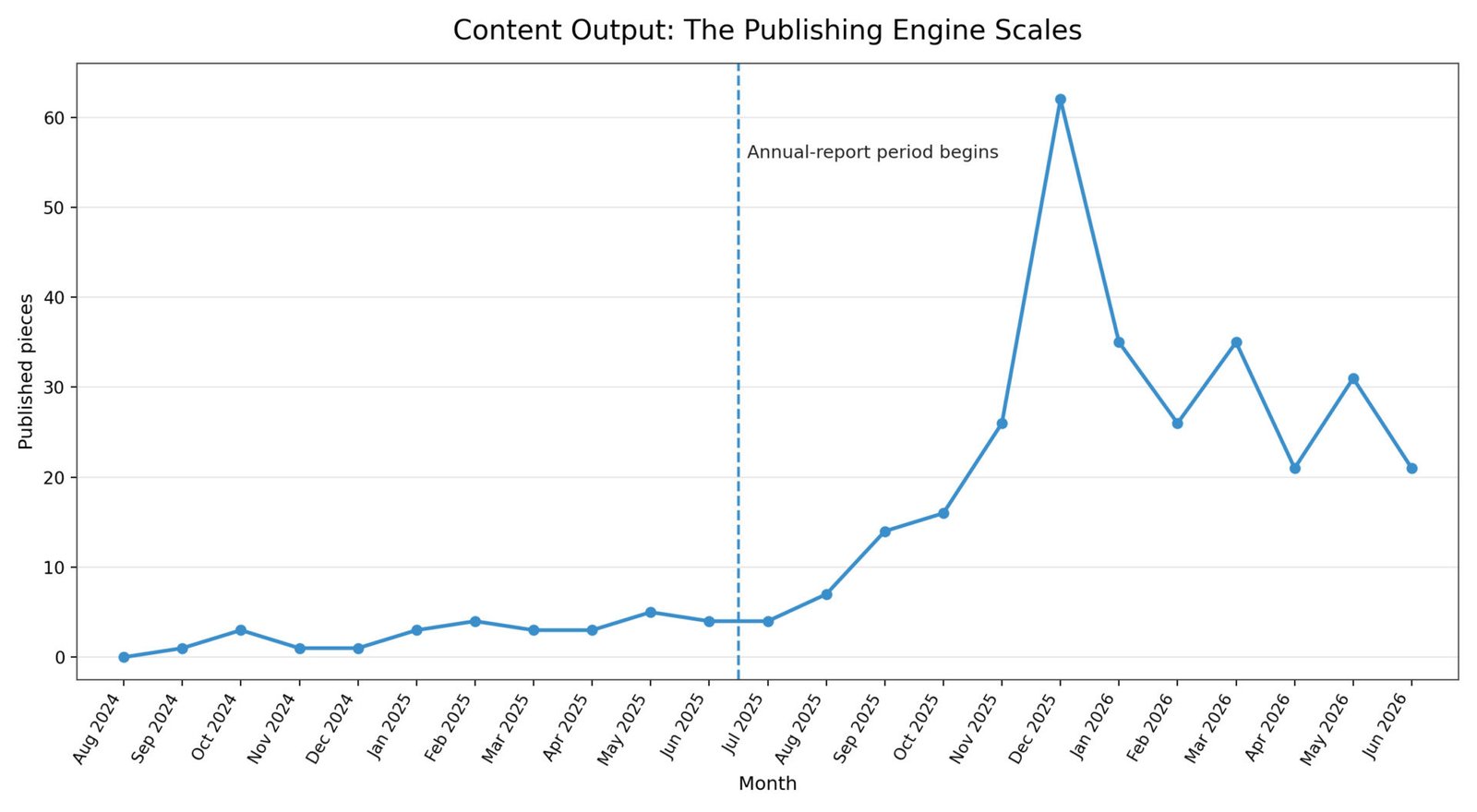
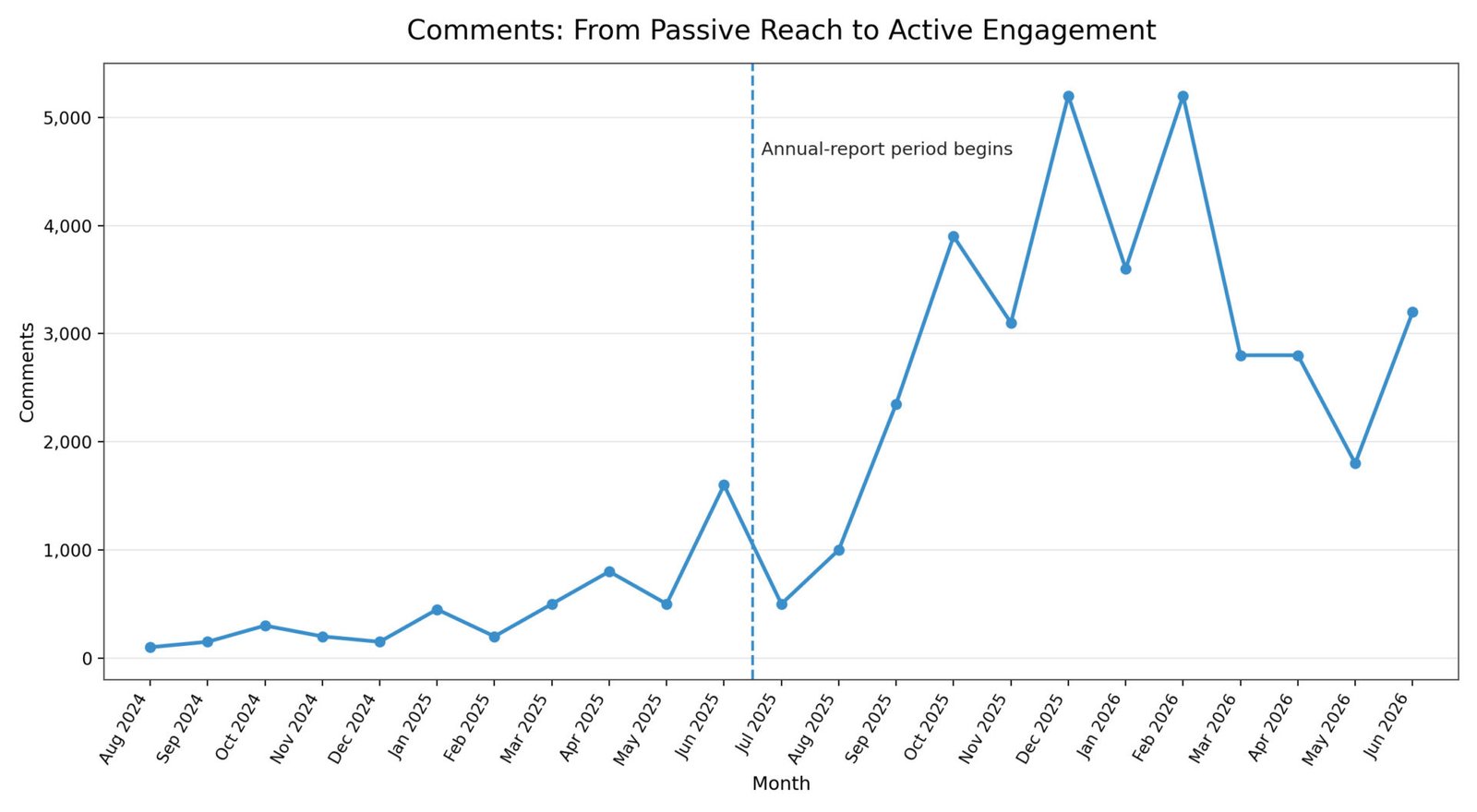
A sharp and sustained rise in output, reach and engagement
Formats
A tiered content system connecting the news cycle to deeper civilisational inquiry.
REELS / SHORTS
Sub-minute interventions designed to enter fast-moving conversations early and direct attention toward larger patterns.
SUMMED UP
Faceless animated explainers that distil ideological, cultural and geopolitical questions into accessible narratives.
PINPOINT
Research-led, piece-to-camera commentary that uses topical moments to make a sharper analytical or civilisational argument.
DEEP DIVE
High-investment animated narratives built on research depth, historical continuity and cinematic treatment.
CHRONICLES
A flagship historical format combining primary-source research, cinematic storytelling and AI-assisted production.
UPCLOSE
Long-form conversations with scholars and practitioners on history, dharma, society, politics and strategic affairs.
BOOKMARK
Book-led conversations online & offline, connecting contemporary global thought with lived tradition.
UPWORD HINDI
Hindi commentary created for accessibility, retention and native short-form distribution.
PRAGYATA
Essays and research-led writing that build durable intellectual capital beyond the video feed.
Important Themes
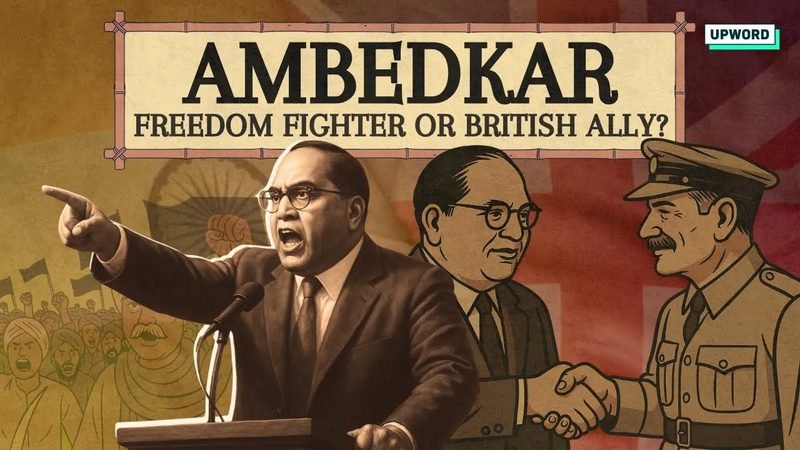
Caste & Ambedkarism
Across the year, caste became one of Upword’s most sustained areas of inquiry not as a sequence of isolated controversies, but as a question about institutions, memory, law, social mobility and political incentives. Videos on reservation policy, inter-caste marriage incentives, caste endogamy, the histories of communities classified as ‘oppressed’, and the BJP’s accommodation of Ambedkarite politics tested dominant explanations against historical and structural evidence.
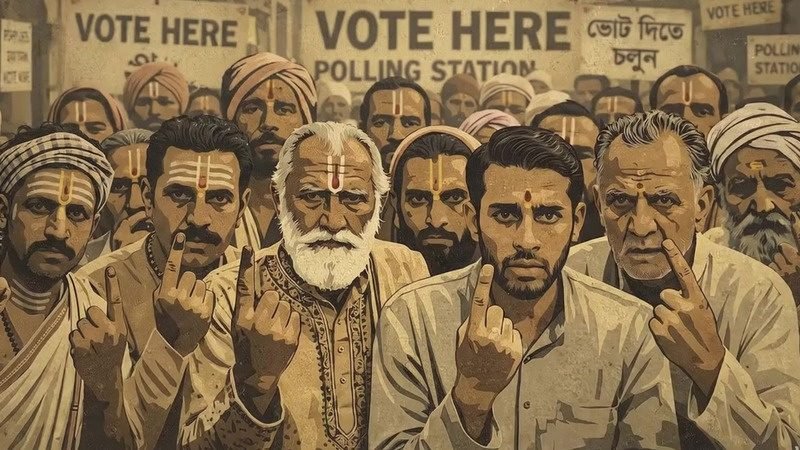
Sensemaking through Political Theory
A second strand of work used political theory to move beyond personalities and daily politics. Concepts drawn from Michael Sandel, Bertrand de Jouvenel, Gregory Clark and other thinkers helped frame recurring Indian debates around meritocracy, centralised power, social hierarchy, democracy and legitimacy. The aim was not to import Western theory uncritically, but to use it as a diagnostic tool—then test its assumptions against Indian history, dharma and social experience.
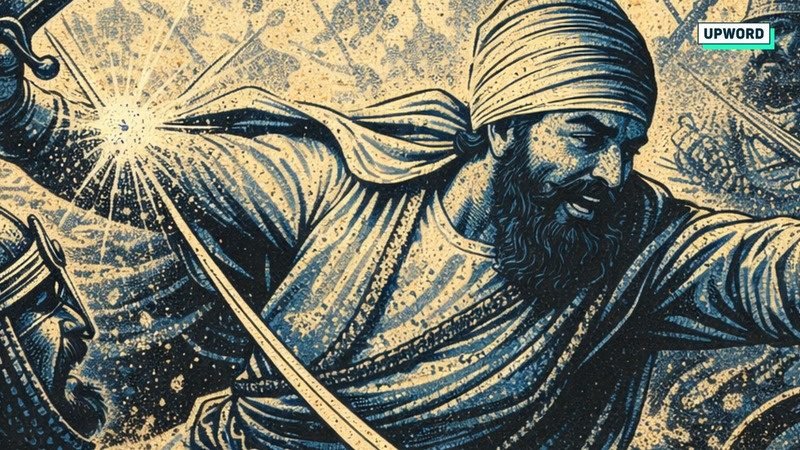
History
Historical work ranged from Rath Yatra and Himalayan ecology to textbook narratives, medieval resistance, missionary archives, the history of slavery in Islamic India, Jyotirao Phule, Guru Tegh Bahadur and colonial approaches to Indian texts.
The recurring method was to return to archives, contemporary records and civilisational context, especially where textbook narratives had reduced complex histories to a single ideological frame.
Chronicles and Deep Dive represented a shift toward more cinematic historical storytelling, while Summed Up retained the ability to make difficult history legible to a wider audience.
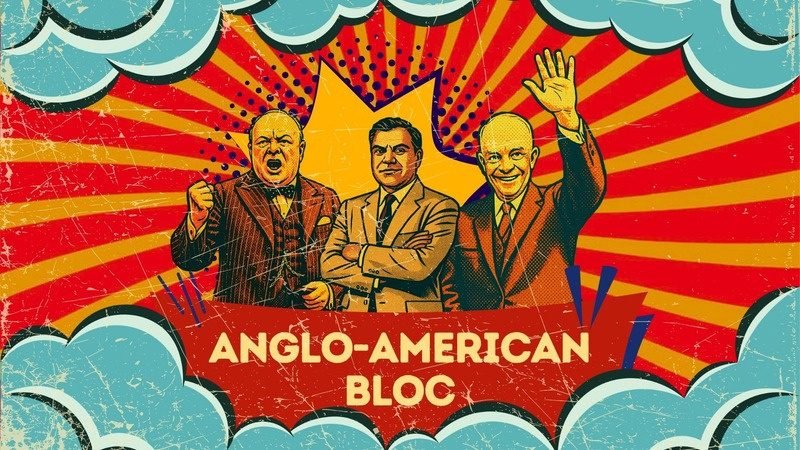
Pakistan
Pakistan appeared repeatedly not merely as a foreign-policy story but as a civilisational and institutional question: the relationship between state ideology, minority persecution, military dominance, economic fragility and cross-border hostility.
The work examined India–Pakistan cricket diplomacy, the prospect of state failure, nuclear risk, the ideological foundations of Pakistan, and recurring attempts to blur Pakistani-specific problems under broader ‘South Asian’ labels.
This theme also demonstrated Upword’s effort to connect current events to longer historical structures rather than treat each crisis as a standalone headline.
Noteworthy Videos
How Brahmin Hatred Spread from MH to TN
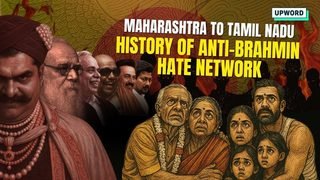
This video uncovers the suppressed history of how Shahu shaped the Justice Party, radicalized Periyar, and laid the foundations for a movement that would later dominate Tamil Nadu — and still echoes in today’s headlines.
Why Hindus of Kerala eat beef
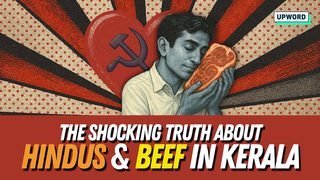
The story of beef in Kerala is not about food, but about power, politics, and identity. This video traces the hidden history of beef in Kerala - from Sangam-era texts that condemned beef-eaters as criminals to 20th-century Communist politics.
How a Nation Built on Hatred is Destroying Itself
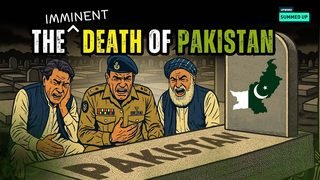
We uncover how over 180 terror attacks in Balochistan and 150 in KP reveal the state’s loss of control, why nearly 1 million Pakistanis emigrated in 2023, and how decades of institutionalized hatred have poisoned the society from the inside.
The Dark Side of Jyotirao Phule
Drawing from Phule’s own writings and contemporary records, the video peels back the sanitised textbook image of Phule to reveal his missionary grooming, open loyalty to the British Raj, and visceral contempt for Hindu civilization and Brahmins.
The Psychology of the Muslim Majority
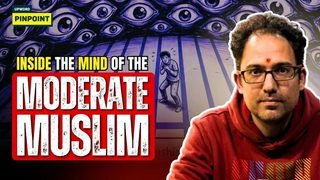
We explore the hidden psychology behind the silence of the moderate majority: how in-group vs out-group thinking, social pressure, and obedience to authority can quietly override empathy for victims who are seen as “others.”
Brahmin Portrayal in Media & Pop Culture
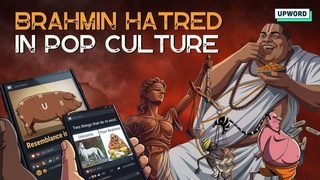
A petition before the SC raised serious concerns about targeted hate speech against Brahmins. From courtroom arguments to cultural narratives, this explainer connects the dots between representation, propaganda, and institutional response.
Did Tegh Bahadur Really Save Kashmiri Pandits?
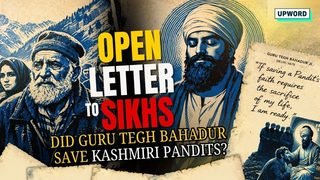
We take a deep dive into primary sources to examine how the false narrative evolved over time. We explore what early records actually say, and more importantly, what they don’t.
India’s Demographic Doomsday
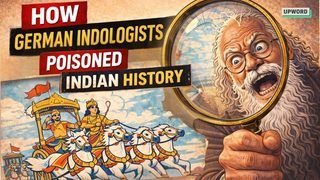
This video dives into the fascinating and often shocking history of 19th-century German Indology, as explored in the book, 'The Nay Science' by Vishwa Adluri and Joydeep Bagchee.
Ecosystem & More
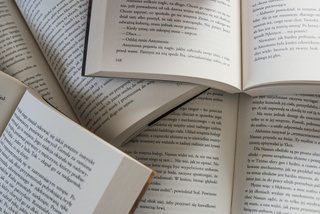
Bookmarker Community
The offline book club created a recurring space for civilisational reading and discussion. More than 75 applications followed the public launch, with young volunteers helping build the operating model and discussion culture.
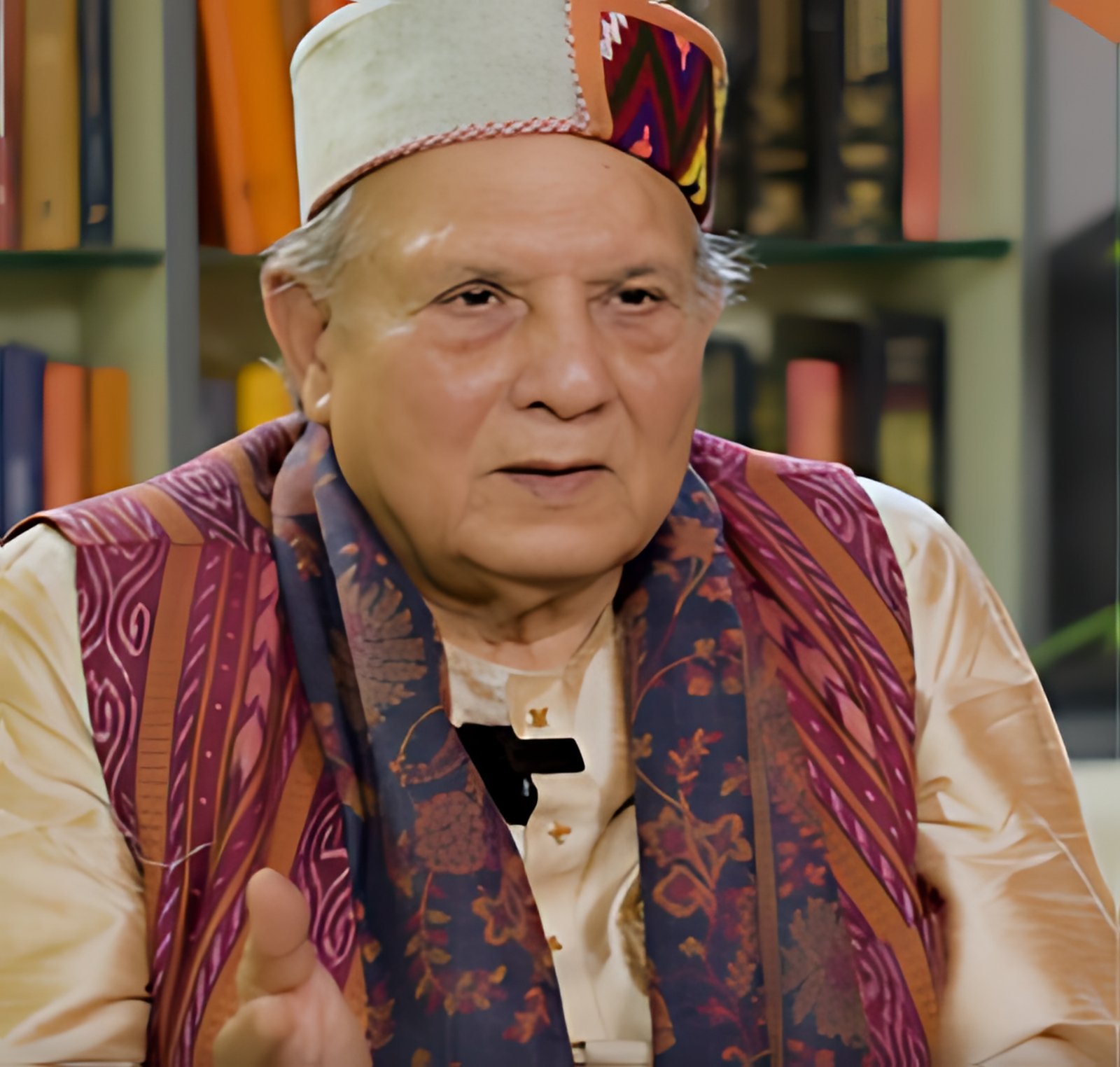
Public Intellectuals & Scholars
Upclose conversations featured diverse voices such as Rahul Dewan, Nithin Sridhar and Padmashree Dr. Bharat Gupt, creating space for long-form inquiry into funding, dharma, Manusmriti, caste, ritual and civilisational memory.
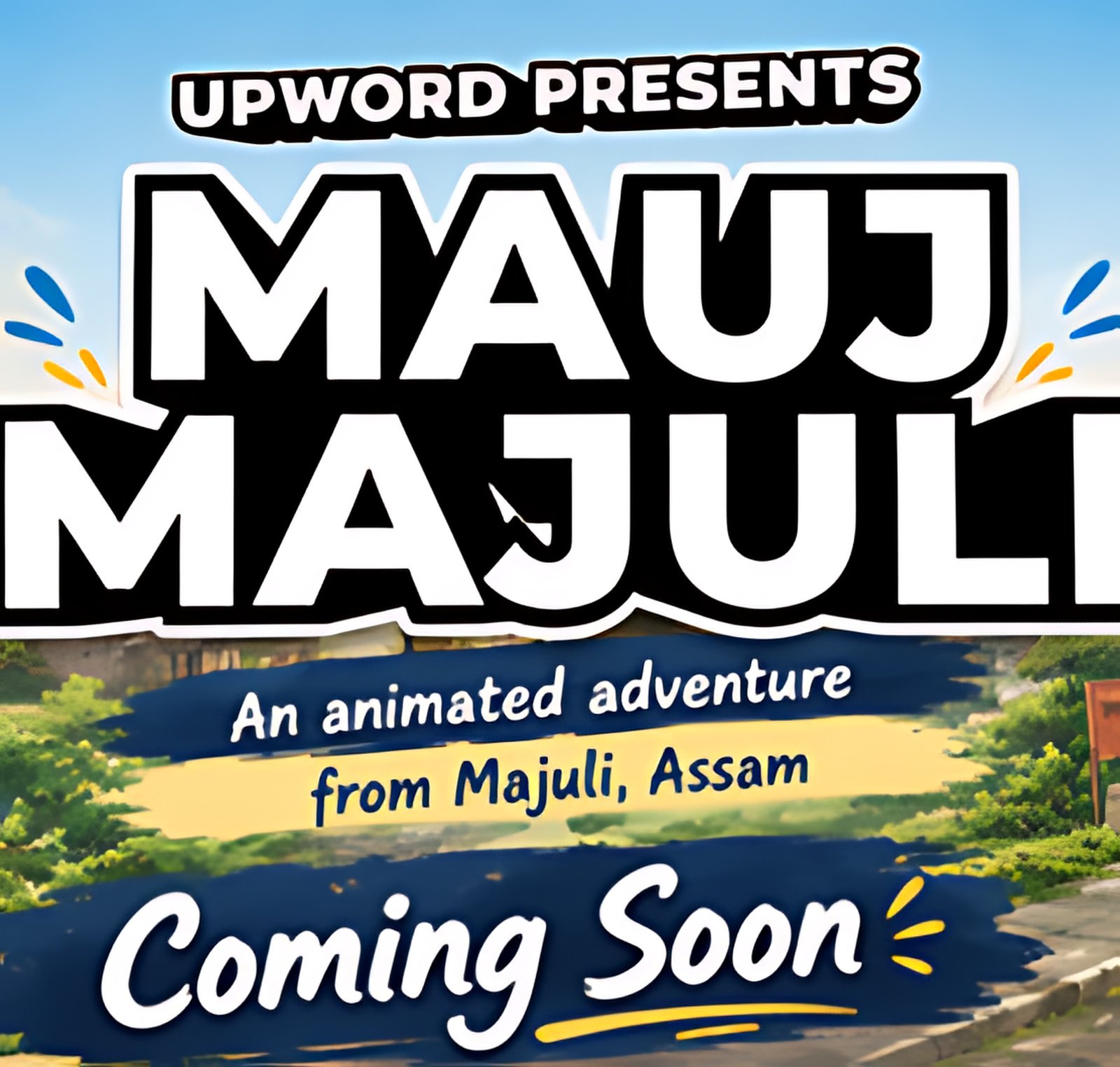
Cartoon Show
Mauj Majuli is a children-centric animated series that brings Assam’s culture, landscapes and stories to young audiences through the adventures of 10-year-old Aditya. The project seeks to build curiosity while bringing Assam’s cultural richness closer to families across India.
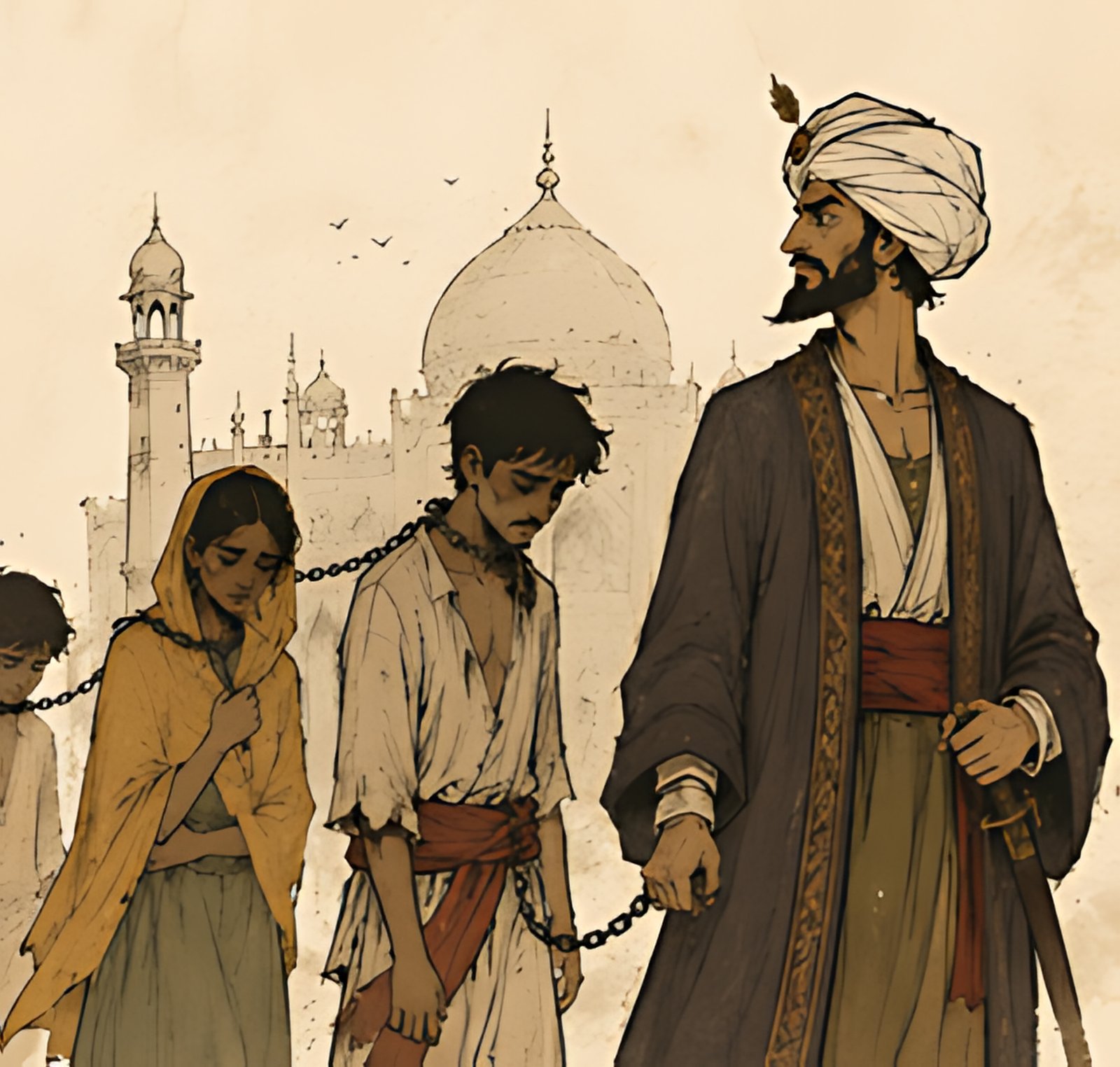
Popularising scholarship
From dismantling German Indology to questioning the direction of Education Policy in India, we tried making complex academic scholarship accessible to more people through animated explainers. Books include The Nay Science, Who is raising your children and Muslim Slave System in Medieval India.
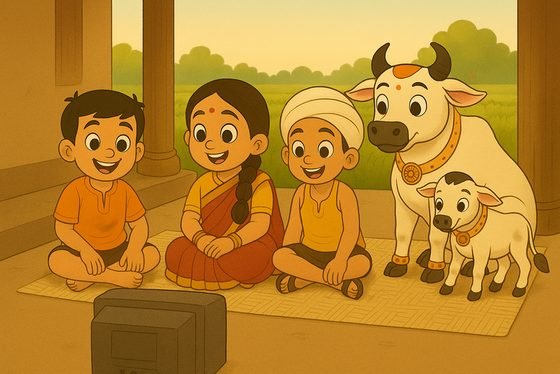
Rhymes
Designed to root young audiences in their cultural inheritance from an early age, the series combines music, animation and familiar devotional themes to make Sanatana’s traditions joyful, accessible and memorable for families across India.
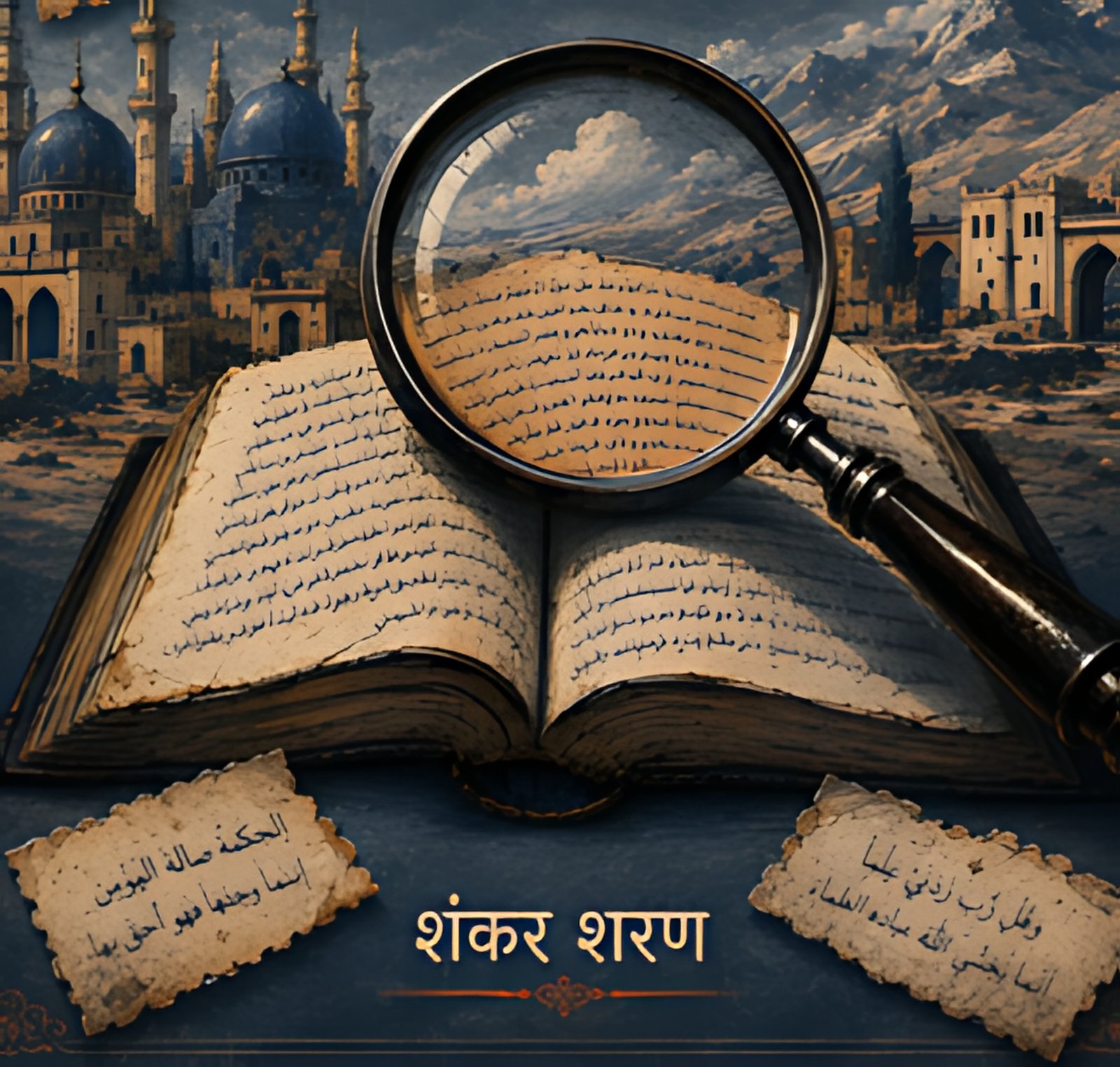
Collaborations
Collaborations with several individuals and organisations - providing pro-bono visual design services, creating content to promote their work, helping with research and writing, curating parts of events and so on, Upword went far beyond the call of duty in the last year to contribute to the larger civilisational work.
Recognition
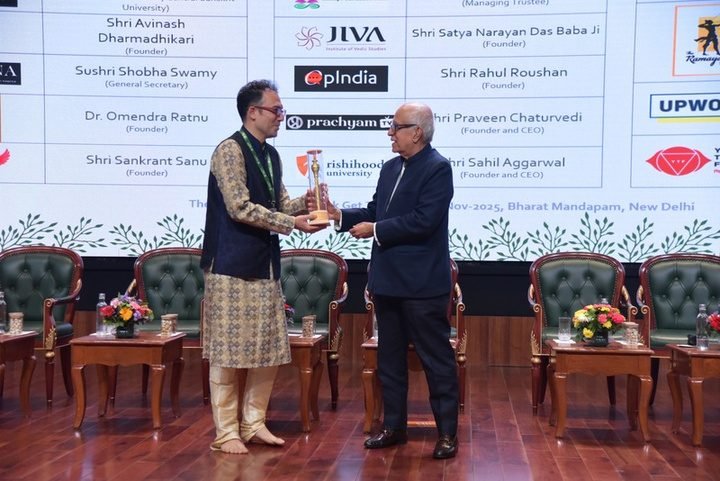
Upword Foundation Receives the Sengol Award
In November 2025, Upword Foundation was honoured with the prestigious Sengol Award by the Banyan Tree Network, recognising our contribution to the service of Dharma through high-quality educational media, public discourse interventions, and civilisational storytelling.
The Sengol, a symbol of righteous authority and cultural continuity, reflects the values we strive to embody: clarity of thought, integrity in research, and deep commitment to Bharatiya civilisation.
This award is not merely a recognition of past work - it is an encouragement to scale our mission further, expand our research, and build a wider cultural footprint through narratives rooted in truth and dharma.
Appreciation from Viewers
Learnings
AI IS HERE TO STAY
AI is no longer an experimental add-on to the production process. It is becoming infrastructure. The opportunity is not simply to produce faster, but to raise the ceiling of what a small mission-driven team can visualise. The durable advantage will come from combining AI with original research, taste, editorial judgement and a disciplined production system.
DELUGE OF CONTENT & ALGORITHMIC MONOPOLY
Distribution is increasingly controlled by a handful of platforms whose incentives can change overnight. Meta’s treatment of repurposed Reels made that dependence visible. In a world of near-infinite content, quality alone does not guarantee discovery; the game of harnessing attention must be played by implementing strategies for high-CTR and retention.
AUDIENCE PREFERENCES ARE CHANGING
Doomscrolling is training audiences to expect speed, novelty and continuous stimulation. Long-form attention is not disappearing, but it has to be earned differently. Short-form conversion to longform is extremely limited. Subscription numbers are not as consequential as before. From the POV of serious discourse building, nurturing a relationship with a loyal audience matter much more.
The Way Forward
Content is not an end in itself. At its best, content is a gateway: it gives language to an intuition, puts an event in context, introduces an audience to a forgotten history, or makes a civilisational problem visible. But if that journey stops at a view, a like or a share, its impact remains incomplete.
The next phase of Upword will therefore have two simultaneous goals. The first is to become markedly better at storytelling, with stronger scripts, more memorable characters, richer visual worlds, better pacing, original Hindi formats, and an AI-enabled production pipeline capable of film-standard ambition. The second is to graduate from being only a content producer to becoming a bridge between people who understand a civilisational problem and people already working to solve it.
That means creating pathways from sensemaking to participation: connecting audiences with research, communities, cultural projects, scholars, institutions and Dharmic causes where their time, skill, networks or resources can matter. The objective is not to turn every viewer into an activist but to make action possible for those who are ready for it.
Support Us
To support or partner with Upword Foundation, please connect with us through our official channels.
